The largest Commonwealth memorial in the world, on the ridge above the Ancre. It carries 72,311 names of British and South African men who died in the Somme sector and have no grave.
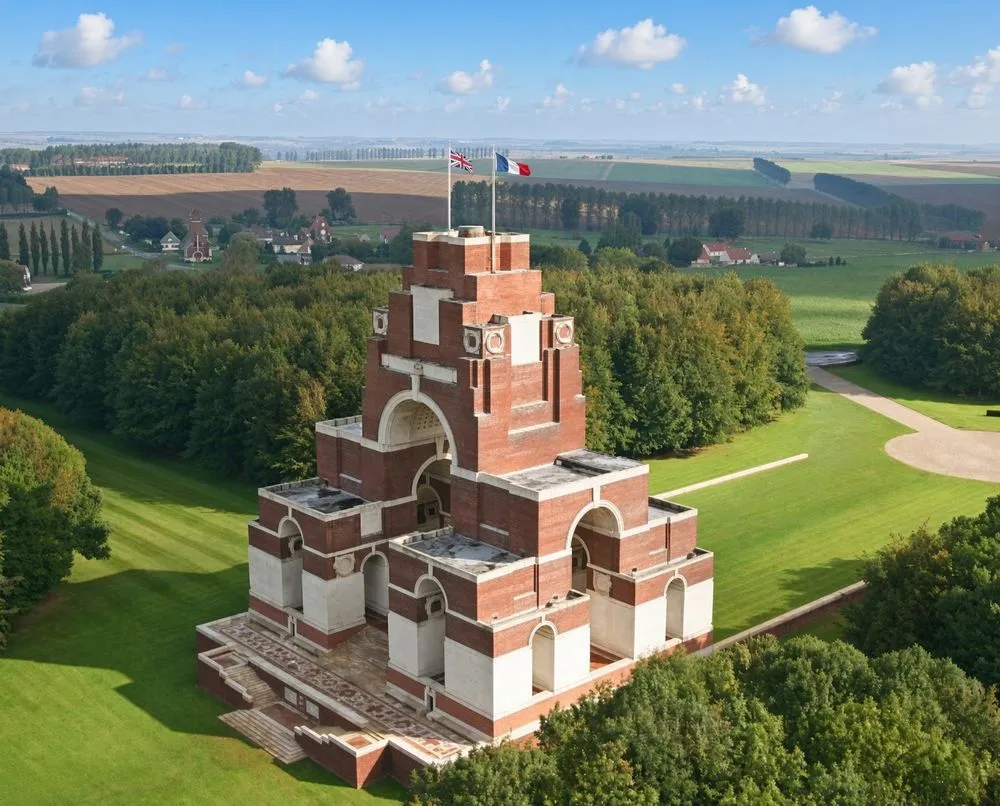
You see it from a long way off, which is deliberate. Edwin Lutyens put a brick and stone arch on the highest ground of the battlefield, and it has been called the greatest piece of British monumental architecture of the twentieth century by people who do not hand that sort of thing out lightly. Up close it stops being architecture. The piers are covered in names, floor to arch, on every face.
The 72,311 are the men who died in this sector, mostly before 20 March 1918, and whose bodies were never identified. They are not a selection or a sample. The Somme swallowed them, and the memorial exists because there was nowhere to put a headstone. Reading the panels, the thing that lands is how many of the surnames repeat: brothers, cousins, and whole streets who joined together.
At the foot of the memorial is the Anglo-French Cemetery, 300 Commonwealth graves and 300 French, laid out deliberately in equal number, and most of them unknown. It is easy to walk past on the way to the arch and it is the quieter of the two things to stand in.
A visitor centre and museum sit below the memorial, and the ceremony held here every 1 July is the largest on the Somme. If you are looking for a particular name, know the regiment before you come: the panels are by regiment and then by rank, and the Commission’s own app will take you to the pier and the face. The ground falls away north towards the Ancre, and from the terrace you can see most of the places the first day of the Somme went wrong.
We would like to count visits with Google Analytics, which sets a cookie. It is not needed for the site to work, and nothing is loaded unless you say yes.